

The common perception of human consciousness is that of a neutral observer. We like to believe that we sit behind our eyes, processing an objective stream of reality and making rational decisions based on cold, hard data. In this worldview, psychological biases—like confirmation bias, loss aversion, or the halo effect—are viewed as “bugs” in our software. They are errors to be corrected, flaws to be minimized, and obstacles to be overcome.
This belief is not only scientifically inaccurate; it is strategically limiting. The human brain is not a neutral processor; it is a high-speed filtering engine. It is a biological machine evolved for survival in a world of high-stakes ambiguity. The “biases” we carry are actually sophisticated heuristics designed to prioritize information and drive action. To fight against them is to engage in a high-friction war with your own biology. The sovereign professional does not attempt to achieve a state of “objective neutrality.” Instead, they practice Cognitive Alignment. They realize that since the mind is always biased toward something, the ultimate high-agency move is to choose exactly what those biases are working toward.
The Biological Filter: The Reticular Activating System
The cornerstone of the intentional mind is the Reticular Activating System (RAS). This bundle of nerves at the base of the brain serves as the primary gatekeeper for your consciousness. We are bombarded with millions of bits of data every second, but our conscious mind can only process a tiny fraction of them. The RAS decides what gets through and what gets discarded.
If you have ever decided to buy a specific model of car and suddenly started seeing that car on every street corner, you have experienced the RAS in action. The cars were always there; your brain simply wasn’t “biased” to notice them. In a professional context, most people leave their RAS on its “factory settings.” Their brain filters for immediate threats, social validation, or the path of least resistance.
The intentional mind performs a Primary Override. By obsessively defining a vision and a specific set of objectives, you command your RAS to filter the world for opportunities, allies, and insights that align with that vision. What the unmapped mind calls “luck” or “synchronicity,” the intentional mind recognizes as Targeted Perception. When your brain is primed for a specific outcome, you notice the low-signal data that everyone else misses. You find the strategic gap in a conversation or the proprietary insight in a market fluctuation because you have programmed your hardware to look for it.
The Strategy of Intentional Confirmation Bias
Confirmation bias is usually cited as the ultimate cognitive sin. It is the tendency to seek out, interpret, and remember information in a way that confirms our pre-existing beliefs. In the realm of politics or social discourse, it creates echo chambers and stagnation. However, when applied to a professional vision, confirmation bias becomes a Momentum Engine.
Once a sovereign operator has committed to a path, they use confirmation bias as a tool for Conviction Building. Instead of being paralyzed by the infinite “reasons why this might fail,” they intentionally feed their brain evidence of “why this must succeed.” This is not about self-delusion; it is about managing the psychological friction of high-stakes execution.
If you are building a new market pillar, your “Internal Narrative” must be supported by a constant stream of validation. By seeking out case studies of similar breakthroughs, identifying early signals of market resonance, and focusing on your own incremental wins, you create a “Gravity Well” of belief. This belief is what allows you to persist when the “Objective Reality” looks grim. Confirmation bias, when aligned with vision, prevents “Mental Drift” and ensures that your energy is always concentrated on the path forward rather than dissipated by doubt.
Reframing Loss Aversion: The Stakes of Stagnation
Loss aversion is perhaps the most powerful bias in the human arsenal. We are neurologically wired to feel the pain of a loss twice as intensely as the joy of an equivalent gain. This bias is what keeps most professionals in the “Security Trap”—they are so afraid of losing their current salary, their current status, or their current comfort that they never take the asymmetric risks required for true supremacy.
The intentional mind does not attempt to suppress this fear; it Reframes the Loss. The default state of the human mind is to fear the loss of the Known. The sovereign state is to fear the loss of the Potential.
By focusing on the “Opportunity Cost” of inaction, you flip the internal pressure. If you remain where you are for another five years, what will you have lost in terms of legacy, influence, and personal evolution? When you define “Stagnation” as the ultimate catastrophic loss, your ancestral fear-center starts working for your vision. The “Risky Move” suddenly feels like the “Safe Move” because the alternative—staying small—is perceived as an intolerable defeat. You are no longer fighting your fear; you are using your fear to fuel your ascent.
The Narrative Framework: Identity as a Tool
Human beings are storytelling animals. We do not experience reality as a sequence of data points; we experience it as a narrative. We possess an inherent “Narrative Bias” that forces us to connect disparate events into a cohesive plot. Most people are “Characters” in a story written by their environment, their culture, or their fears.
To inhabit an intentional mind is to become the Architect of the Narrative. You realize that the “Story of the Self” is the most powerful lever of influence you possess.
- The Fragmented Narrative: “I am someone who is trying to be successful but often faces setbacks.”
- The Intentional Narrative: “I am an operator in the process of mastering a domain, and every setback is a tactical data point required for the next breakthrough.”
This shift in story changes the “Psychological Math” of effort. When you view yourself as a “Master in Training,” the drudgery of deep work and the friction of conflict become “Necessary Plot Points” rather than “Signs of Failure.” Your narrative bias ensures that you remain “Antifragile.” You stop seeking external validation for your story and start generating the results that make the story undeniable.
The Engineering of the Halo Effect
In social psychology, the Halo Effect is the tendency for an impression created in one area to influence opinion in another. If someone is perceived as being highly disciplined in their physical life, we unconsciously assume they are disciplined in their professional life. While often irrational, this bias is a critical component of Relational Leverage.
The intentional mind recognizes that “Perception is a Layer of Reality.” Instead of resenting the halo effect, you engineer it. By becoming undeniably world-class in a single, high-visibility domain—whether it is your “Proprietary Insight,” your communication style, or your technical execution—you trigger the halo effect in the minds of your “Growth Coalition.”
This creates a “Reputational Moat.” People start to give you the benefit of the doubt in areas where you are still growing because your “Halo of Excellence” precedes you. You aren’t “manipulating” perception; you are choosing to lead with your strongest assets to reduce the “Friction of Trust.” You ensure that the external reflection of your mind is as sharp and intentional as the internal reality.
Conclusion: The Sovereignty of the Internal Map
Your professional trajectory is not determined by the “Market,” the “Economy,” or “Luck.” It is determined by the Internal Map you use to navigate those forces. If your map is cluttered with unintentional biases and reactive filters, you will always be a passenger in your own career.
The Intentional Mind is the act of “Owning the Map.” It is the constant, disciplined alignment of your internal heuristics with your external objectives. You realize that “Sovereignty” is the ability to choose your own filters, reframe your own fears, and write your own story. You stop trying to be “Rational” and start being “Effective.”
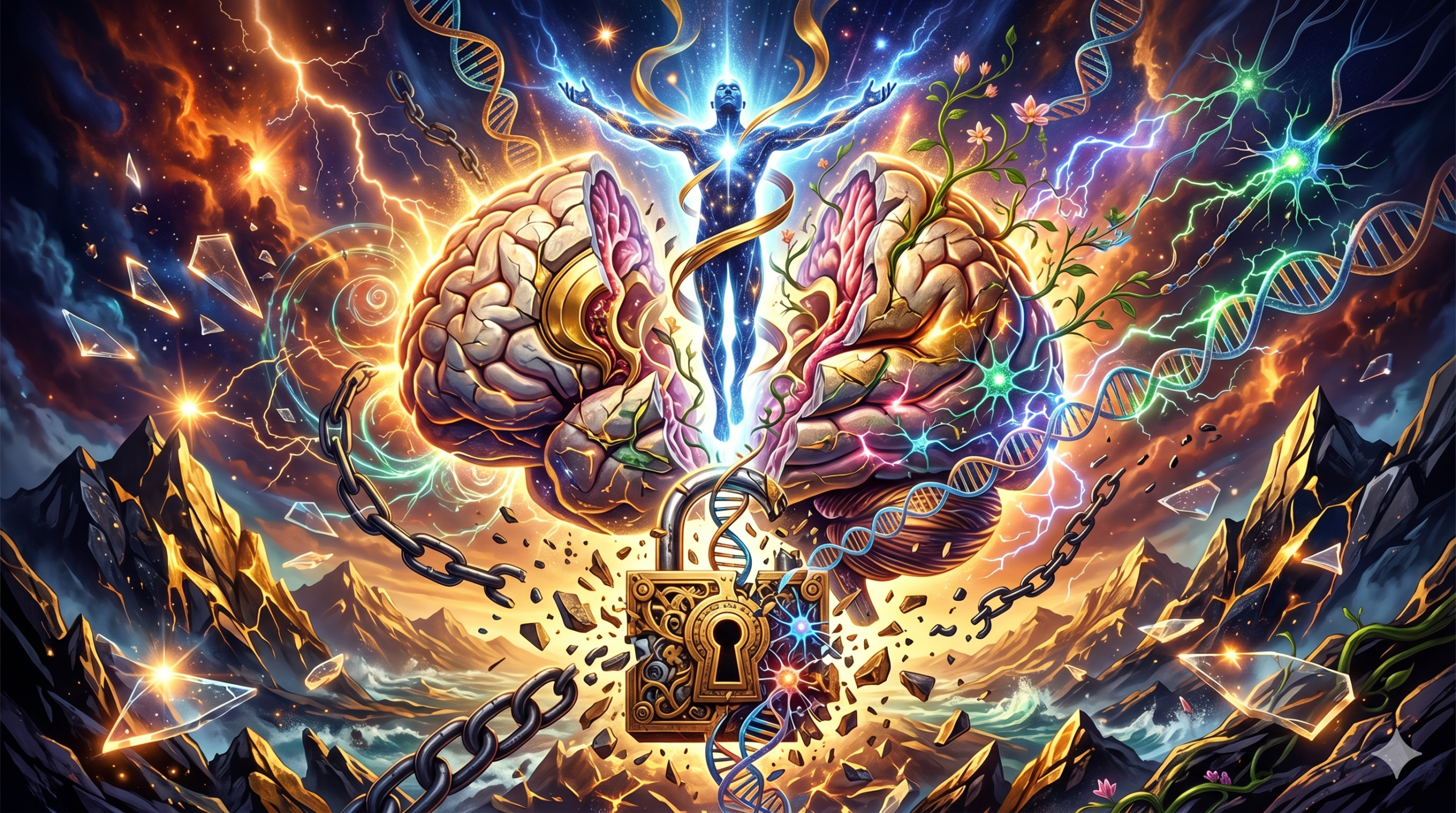
When your internal biases are working in harmony with your vision, the “Grind” disappears. You move with a level of “Clarity” and “Velocity” that seems supernatural to the distracted masses. You aren’t working harder; you are simply no longer fighting yourself. The mind is no longer a prison of ancestral impulses; it is a precision-engineered weapon for the creation of your legacy.
Align the filter. Reframe the stakes. Own the narrative.













Leave a Reply