

In the high-velocity professional theater of 2026, we have moved beyond the era where “stability” was a viable career goal. The current market is characterized by a state of “Permanent Turbulence”—a relentless cycle of innovation, disruption, and systemic shock. For the modern operator, the question is no longer if a crisis will occur, but how quickly you can move from the impact into a state of Post-Crisis Thriving. Survival is the baseline; it is the absolute minimum requirement to stay in the game. But the elite professional recognizes that a crisis is more than a disaster—it is a high-fidelity stress test of their internal architecture. To thrive in the aftermath is to use the wreckage of the collapse as the raw material for a more resilient, sophisticated version of yourself.
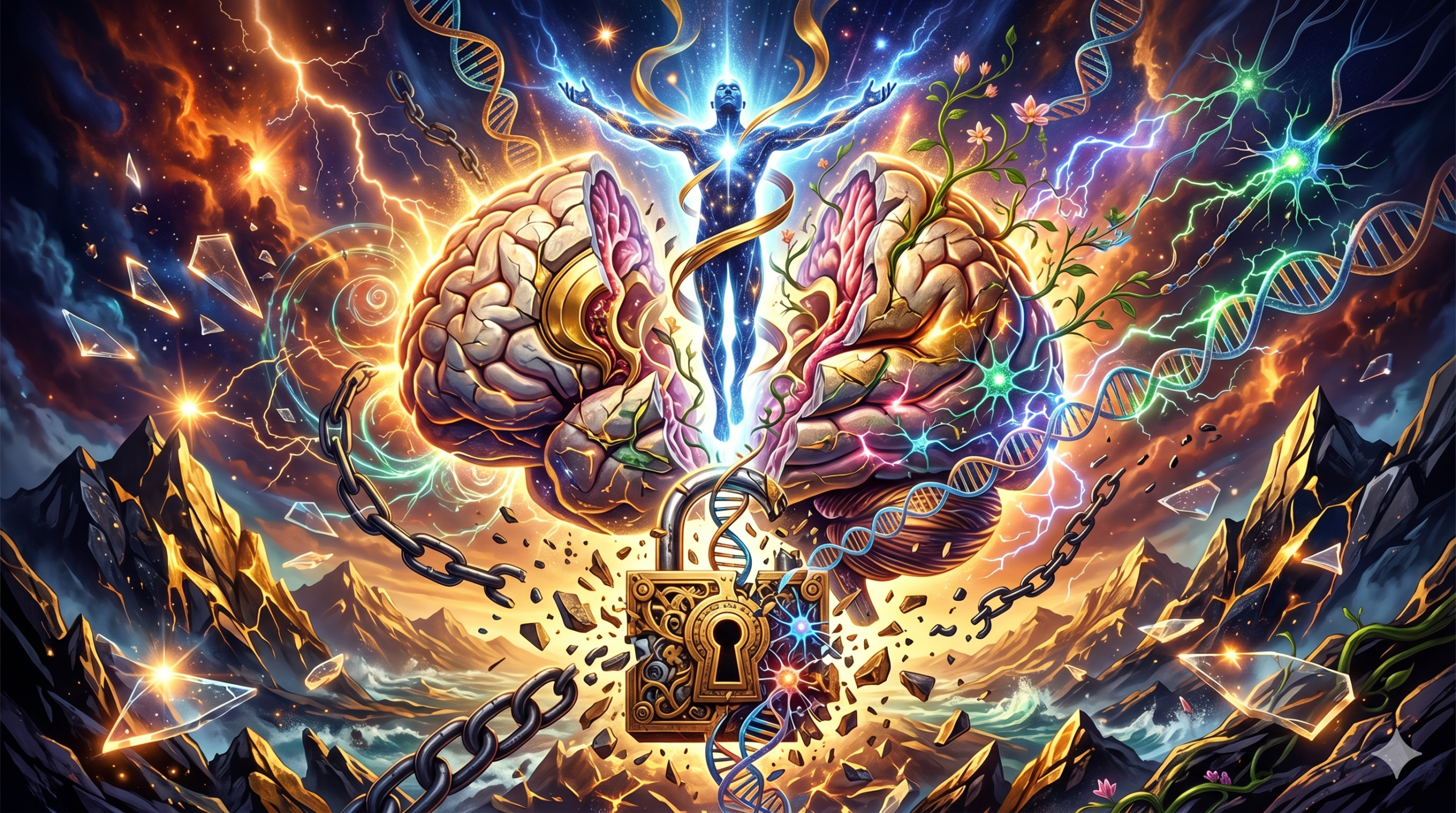
Post-crisis thriving is built on the concept of Anti-Fragility. While a “resilient” system resists shocks and returns to its original state, an “anti-fragile” system actually improves because of the shock. In a professional context, this means that your mental health, your strategic clarity, and your market power should be higher after a catastrophe than they were before. This is not achieved through “positive thinking” or ignoring the damage. It is achieved through a clinical, systematic approach to Psychological Kintsugi—the art of repairing the breaks in your professional identity with the “gold” of new protocols, sharper logic, and a deeper understanding of your own internal mechanics.
The Kintsugi Logic: Repairing with Strategic Intent
In traditional Japanese pottery, Kintsugi is the practice of repairing broken ceramic with lacquer mixed with powdered gold. The philosophy is that the piece is more beautiful and valuable because it was broken and repaired. In the market of 2026, your professional “scars”—the failed launches, the reputational hits, the periods of burnout—are the most valuable parts of your resume, provided you have repaired them correctly.
Most professionals try to hide their failures or “patch” them with temporary fixes (denial, distraction, or frantic pivoting). This creates “Brittle Architecture.” The scars remain weak points that will fracture again during the next market surge. Thriving requires you to treat the break as a Structural Opportunity. You don’t just “fix” the problem; you use the repair process to upgrade the entire system. You fill the cracks with “Gold”—high-fidelity lessons that make the original failure impossible to repeat.
- The Diagnostic Audit: Identifying exactly why the system broke. Was it a failure of energy management? A lack of relational boundaries? An over-reliance on a single market signal?
- Protocol Integration: Turning the lesson into a hard-coded “Standard Operating Procedure.” If you burned out because of “Always-On” culture, your “Gold” is a non-negotiable Shutdown Protocol.
- The Aesthetic of Experience: Developing the “Professional Wit” that only comes from having survived a crisis. You move with a quiet confidence because you know exactly where your limits are and how to navigate them.
The Post-Mortem of the Processor: Clearing the Cortisol Slag
A crisis is a metabolically expensive event. When you operate in “Survival Mode” for an extended period, your brain is bathed in cortisol and adrenaline. This chemical surge is great for immediate firefighting, but it is toxic to long-term strategy. It narrows your vision, degrades your empathy, and creates a “Cognitive Slag” that makes you feel sluggish and cynical long after the immediate danger has passed.
Thriving in the aftermath requires a Neuro-Chemical Flush. You cannot move into a growth phase while your hardware is still stuck in a threat-response loop. This is where most high-achievers fail; they attempt to pivot immediately into the “Next Big Thing” without clearing the metabolic waste of the last one. This leads to “Compounded Fatigue,” where each subsequent crisis finds you with less and less “Executive Reserve.”
- Systemic Down-Regulation: Utilizing physiological tools—breathwork, sensory deprivation, or intense physical movement—to signal to the nervous system that the “Storm” is over.
- Cognitive Cache Clearing: A total digital and social blackout for a pre-defined period (24–72 hours). This allows the brain’s “Default Mode Network” to process the data of the crisis without the interference of new inputs.
- Metabolic Re-Fueling: Prioritizing the “Biology of Recovery.” High-quality sleep and nutrient-dense inputs are not “perks”; they are the primary cooling system for your cognitive hardware.
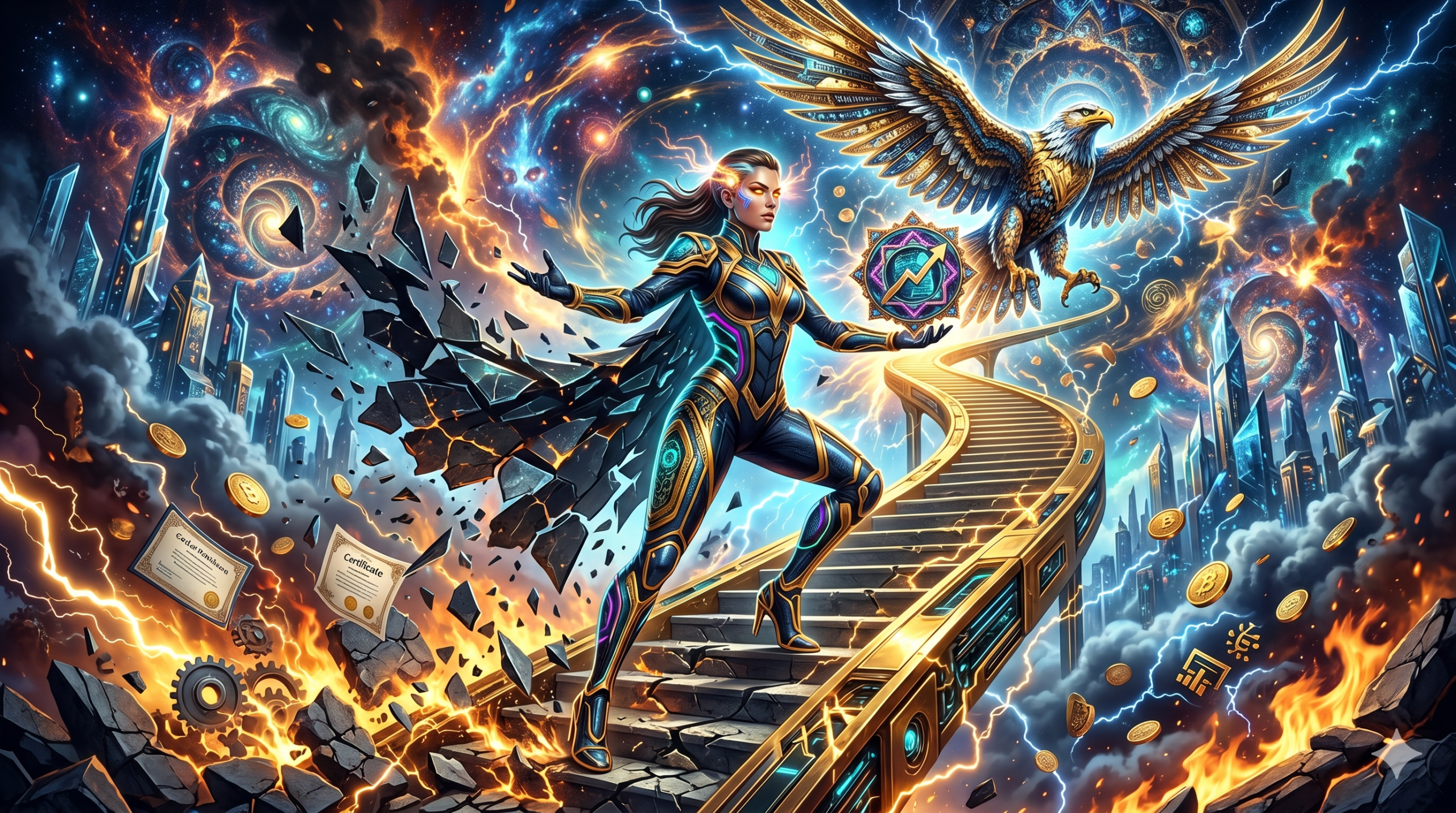
Operational Insight: You cannot build a high-resolution future on a low-battery mind. The “Flush” is the necessary precursor to the “Ascent.” If the hardware is hot, the software will lag.
Decoupling the Identity: The Firewall of Sovereignty
The greatest threat to post-crisis thriving is the Identity Trap. When we tie our self-worth to our professional outcomes, a market crisis becomes a personal catastrophe. If you are your job, then a failed project isn’t just a business loss—it is a “Death of the Self.” This emotional entanglement makes it impossible to perform a clinical analysis of the failure. You cannot fix the system if you are too busy defending your ego.
Thriving requires a Strategic Decoupling. You must install an “Emotional Firewall” between your value as a human being and your performance as a market operator. You are not “The Successful Executive”; you are “The Individual Who Manages Executive Systems.” When the system fails, you don’t feel “lesser”—you feel “informed.” You treat the failure as a data point, a bug in the code that needs to be patched, rather than a moral failing.
- The “Actor-Observer” Shift: Learning to view your own professional actions as if they belonged to someone else. This detachment allows for the ruthless honesty required for an anti-fragile recovery.
- Diverse Value-Sourcing: Ensuring that your sense of “Winning” is derived from multiple life-nodes—health, relationships, personal mastery—rather than just the professional node.
- The Wit of the Outsider: Developing the ability to laugh at the absurdity of the market. Humor is the ultimate signal of sovereignty; it proves that the crisis hasn’t taken your perspective.
Market Recalibration: Finding the New Signal
The world looks different after a crisis. The variables have shifted, the power dynamics have moved, and the old “Maps” are likely obsolete. Post-crisis thriving involves a Market Recalibration. You don’t go back to the old signal; you look for the new one that the crisis has revealed.
Crises are “Information Accelerants.” They expose the rot in legacy systems and create vacuums that can be filled by new, more efficient architecture. While your competitors are still trying to “return to normal,” you are scanning the wreckage for the Unfair Advantage. What did this crisis reveal about customer behavior? What technological vulnerabilities were exposed? Which of your competitors are too “brittle” to recover?
The Resilience Buffer: Building for the Next Surge
Ultimately, post-crisis thriving is about building the Resilience Buffer for the next cycle. You use the “Lull” after the storm to reinforce your architecture. You don’t wait for the next crisis to test your mental health; you “Stress-Test” it during the good times.
This involves “Negative Visualization”—the practice of imagining the next systemic shock and identifying where your current system would break. By “pre-breaking” your own systems in a controlled environment, you ensure that you are never surprised by the market. You move from being “Reactive” to being “Anticipatory.” You aren’t just prepared for the storm; you are the one who knows how to use the wind.
Conclusion: The Sovereignty of the Rebuilt Mind
The professional who thrives after a crisis is a different species of operator. They move with a precision and a calm that can only be earned in the fire. They have lost the “Naivety of the Untested” and replaced it with the Sovereignty of the Proven. In the market of 2026, this is the only true form of job security.
You cannot control the volatility of the economy. You cannot stop the “Black Swan” events from landing on your desk. But you have absolute authority over how you integrate those events into your internal narrative. Stop fearing the breaks. Start looking for the gold. Thriving is not about avoiding the damage—it is about being the person who knows how to use the damage to build a masterpiece. The crisis is over. The ascent is yours to design.











Leave a Reply