

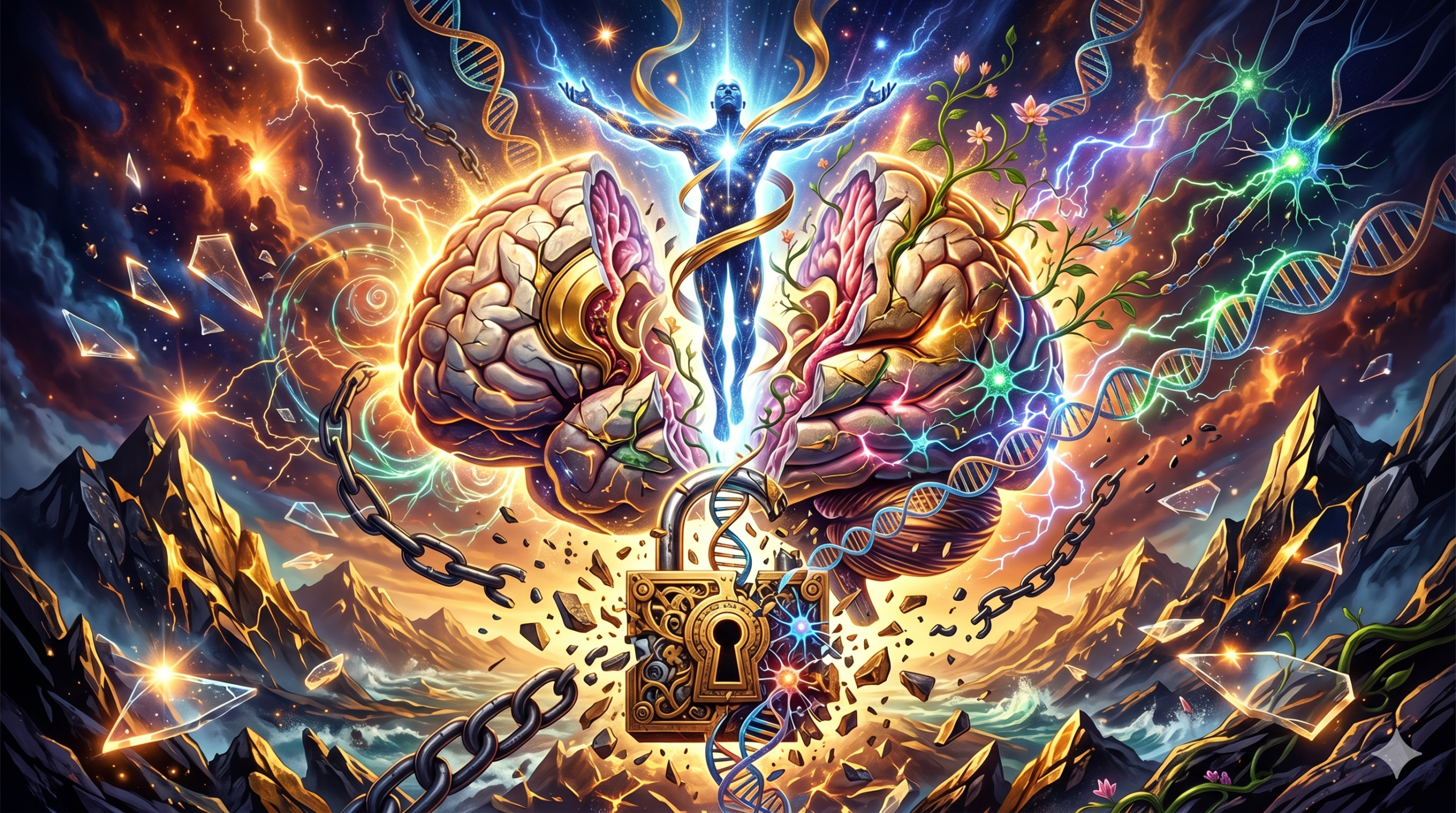
In the hyper-accelerated professional landscape of 2026, the traditional concept of “career development” has become an artifact of a slower era. The old model—characterized by linear progression, steady skill acquisition, and occasional vertical moves—is far too rigid to survive the current market volatility. To thrive today, the elite operator must embrace Professional Meta-Growth. This is not simply the act of growing; it is the strategic optimization of the growth process itself. It is the transition from being a student of a discipline to being an architect of your own evolution.
Professional Meta-Growth is built on the realization that your ability to adapt is your only permanent competitive advantage. While specific technical skills are depreciating at an unprecedented rate, the underlying Cognitive Architecture that allows you to identify, acquire, and synthesize those skills is a compounding asset. To achieve high-velocity evolution, you must move beyond the “What” of your career and master the “How” of your professional transformation.
The Paradigm of Intellectual Liquidity
The first pillar of Meta-Growth is Intellectual Liquidity. In a stagnant economy, specialization is a safe harbor. In a volatile one, over-specialization is a form of professional fragility. Intellectual liquidity is the ability to rapidly reallocate your mental capital from one domain to another without losing strategic efficacy.
This does not mean being a “jack of all trades,” which often results in being a master of none. Instead, it involves mastering “Universal First Principles”—the underlying logic that governs complex systems across different industries. When you understand the fundamental mechanics of human behavior, economic incentives, and systemic feedback loops, you can enter a new domain and reach 80% competency in a fraction of the time it takes others.
Meta-Insight: The high-velocity operator treats their career like a venture capital fund rather than a savings account. You are looking for “Asymmetric Opportunities” where your existing mental models can be applied to new problems for a 10x return on impact.
The OODA Loop for Career Navigation
To maintain high-velocity evolution, you must implement a rapid feedback loop for your career decisions. Borrowing from military strategy, the OODA Loop (Observe, Orient, Decide, Act) provides a perfect framework for Meta-Growth.
- Observe: Constantly scan the fringes of your industry. Where is the friction? What are the “unsolved problems” that the incumbents are ignoring?
- Orient: Filter these observations through your unique Relational Logic. How does this new data change your current career trajectory? What biases are preventing you from seeing the reality of the market?
- Decide: Commit to a strategic pivot or a new skill acquisition cycle based on the orientation.
- Act: Execute the change with maximum intensity and minimum delay.
The goal is to cycle through this loop faster than the market can change. While your competitors are still “analyzing the trends,” you have already moved, tested the new environment, and re-oriented for the next shift. This “Decision Velocity” is the primary driver of career acceleration.
Strategic Unlearning: The Art of Cognitive Shedding
One of the greatest barriers to Meta-Growth is the accumulation of “Legacy Logic”—mental models and habits that were successful in the past but are now obsolete. As you evolve, your previous successes can become your greatest vulnerabilities. High-velocity evolution requires the discipline of Strategic Unlearning.
This is the process of identifying and “shedding” outdated expertise to make room for high-fidelity new models. It is a form of cognitive pruning. Just as a gardener prunes a tree to encourage new growth, the elite professional must periodically audit their mental toolkit and discard anything that is creating Cognitive Drag.
- Sunk Cost Immunity: The ability to walk away from a skill or a project you’ve invested years in if it no longer serves your long-term evolution.
- Default Skepticism: Periodically questioning your “Expertise.” Ask yourself: “If I were starting my career today, would I still do it this way?”
- The Beginner’s Mindset: Intentionally entering new domains as a novice to prevent the calcification of your thinking.
Skill Stacking and Cross-Domain Synthesis
Meta-Growth is maximized through the process of Skill Stacking. Instead of trying to be the best in the world at one thing—which is statistically improbable—you aim to be in the top 10% of three or four unrelated but complementary domains. The intersection of these skills is where your unique market power is generated.
When you synthesize high-level technical proficiency with interpersonal mastery and strategic clarity, you create a “Category of One.” You are no longer competing on price or tenure; you are competing on the uniqueness of your synthesis. This is the ultimate expression of Asymmetric Competition. You aren’t playing the same game as everyone else; you are playing a game that only you are equipped to win.
The Evolution Grid: Mapping the Meta-Growth Trajectory
Network Topology Evolution
Your career evolution is directly influenced by the quality of the nodes in your professional network. As you move through the Meta-Growth phases, your network topology must also evolve. In the early stages, you need “Information Nodes”—people who know more than you. In the advanced stages, you need “Leverage Nodes”—people who control access to resources, capital, and high-stakes opportunities.
Evolution requires a “Network Audit.” If you are the smartest person in your primary circle, your growth will eventually plateau. You must intentionally seek out “Discomfort Nodes”—individuals who challenge your thinking, expose your blind spots, and operate at a level of complexity that forces you to upgrade your own Cognitive Architecture.
The Executive Architect: Designing the Long Game
Ultimately, Meta-Growth is about becoming the Executive Architect of your own life. It is the move from a “Reactive Career” to an “Intentional Path.” You are no longer waiting for opportunities to be granted to you by a corporation or a manager; you are engineering the conditions under which those opportunities become inevitable.
This design process requires a high degree of Strategic Patience combined with a high degree of Tactical Urgency. You must have the long-term vision to see where you want to be in five years, but the short-term intensity to do whatever is necessary today to move the needle.
- The 80/20 of Growth: Identifying the 20% of your activities that produce 80% of your professional evolution.
- The Multiplier Effect: Focusing on projects that don’t just “succeed” but also increase your future capabilities and options.
- The Reputation Asset: Building a “Personal Brand” that acts as an automated lead-generation engine for high-value opportunities.
Conclusion: Mastery of the Recursive Self
High-velocity career evolution is not a destination; it is a permanent state of being. It is the realization that you are a work in progress—a “Professional Beta” that is constantly being updated and refined. The Evolution Mindset is the commitment to never let your “Success” become your “Celing.”
By mastering the science of Meta-Growth—through intellectual liquidity, feedback loop optimization, strategic unlearning, and skill synthesis—you move beyond the limitations of the traditional career path. You navigate the volatility of the 2026 market with a quiet confidence and a sharp, witty perspective. You aren’t just surviving the future; you are creating it, one strategic evolution at a time. The world belongs to the operators who can change as fast as the environment. It’s time to upgrade your OS.













Leave a Reply