

We live in a culture that fetishizes the “Big Idea.” We worship the “aha!” moment, the lightning strike of inspiration, and the visionary napkin sketch. We treat creativity as if it’s a rare, mystical substance that only a few chosen “creatives” possess.
But here is the cold, hard truth of the high-performer: An idea without execution is just an hallucination.
The world is full of brilliant thinkers who have never built anything. They have folders full of “revolutionary” concepts and notebooks packed with “game-changing” strategies, but they are stuck in a state of perpetual potential. To move from a “Thinker” to a “Doer,” you have to master the art of Creative Execution. You have to learn how to drag a raw, messy thought out of the clouds and anchor it into reality.
The Ideation-Action Gap: Why We Get Stuck
The reason most people fail to execute is that they are waiting for the “Perfect Version” of the idea to appear. They believe that if they just think about it a little longer, the path will become clear and the risk will disappear.
This is a biological trap. Your brain loves ideation because it’s safe. Thinking about a business doesn’t involve the risk of losing money. Thinking about writing a book doesn’t involve the risk of a bad review. Execution, however, is a high-stakes environment. The moment you take action, the “Perfect Idea” meets the “Messy Reality,” and your ego takes a hit.
The Execution Spectrum: From Thought to Reality
3 Strategies for Transforming Thoughts into Action
1. The “Low-Fidelity” Prototype
The biggest enemy of execution is the “High-Fidelity” trap. You think you need the perfect website, the perfect logo, or the perfect opening chapter to start. You don’t. You need a Low-Fidelity version. * If you have an idea for an app, draw it on a piece of paper.
- If you have an idea for a service, sell it to one friend.
Low-fidelity reduces the “Activation Energy” required to start. It makes the transition from “Thought” to “Thing” as painless as possible.
2. The 48-Hour Rule
Ideas have a “half-life.” The longer an idea sits in your head without an accompanying action, the more likely it is to die. To maintain the “Creative Momentum,” you must take one physical action on a new idea within 48 hours.
It doesn’t have to be a big action. Buy the domain name. Send the introductory email. Write the first 200 words. This physical act “anchors” the idea in the real world and signals to your brain that this isn’t just another daydream.
3. Intentional Imperfection
Accept that the first version of your execution will be “ugly.” It will be clunky, flawed, and potentially embarrassing. Execution is a process of iteration, not a single event. You cannot “think” your way to excellence; you have to “act” your way there. Every “bad” first draft is a necessary bridge to the “great” final version.
The Architecture of the “Doer”
Creativity is not what happens in your head; it’s what happens at your fingertips. It’s the friction between your intent and the tools you use. The most successful people in 2026 aren’t the ones with the “best” ideas; they are the ones who can shorten the distance between a thought and a prototype.
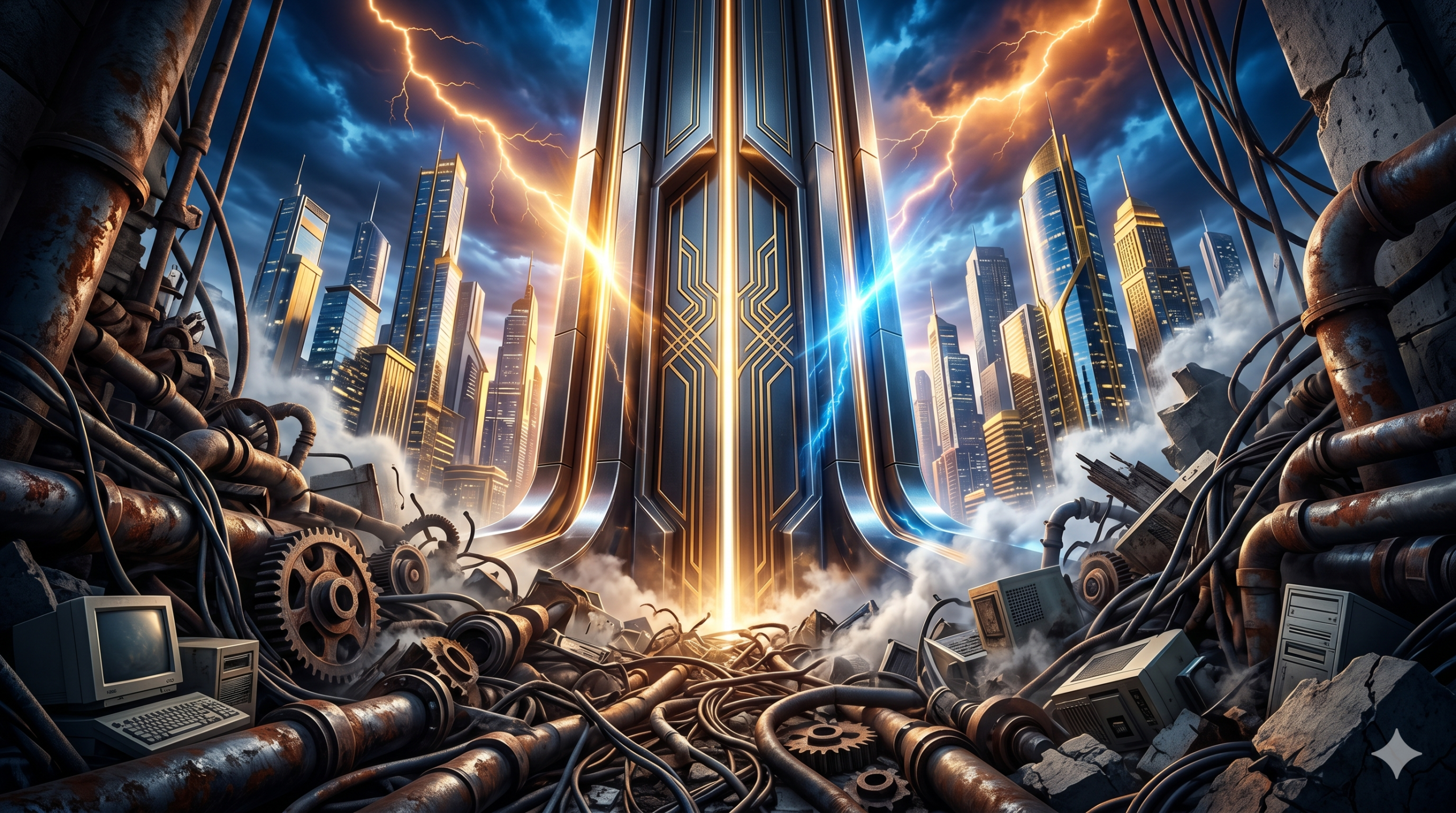
Stop waiting for the lightning to strike.
Start building the lightning rod.
The thought is the spark.
The execution is the fire.












Leave a Reply