

In the lifecycle of an enterprise, there exists a critical juncture where the objective shifts from achieving success to establishing a legacy. For the visionary leader, success is measured by current performance—revenue, market share, and profitability. Legacy, however, is measured by the endurance of the organization’s impact after the leader’s direct involvement has ceased. Building a legacy is a deliberate, technical process of institutionalizing values, engineering autonomous systems, and ensuring the continuity of a mission across generational timelines. It is the final and most complex stage of leadership, requiring a transition from “Primary Actor” to “Systemic Architect.”
The Anatomy of a Business Legacy
A business legacy is not merely the accumulation of wealth or a charitable endowment. It is the structural integrity of a company that allows it to thrive in the absence of its founder. This requires the leader to solve the “Founder Dependency” problem—a state where the organization’s unique value proposition is tied inextricably to the individual’s intuition and energy.
To build a legacy, a leader must focus on three primary pillars:
- Cultural Encoding: Translating subjective values into objective behavioral norms.
- Structural Governance: Establishing legal and operational frameworks that protect the mission.
- Succession Intelligence: Identifying and cultivating a leadership pipeline capable of evolving the vision.
The Transition from Success to Significance
While success is often inward-facing (how much did the company gain?), significance is outward-facing (how much did the company change the world or its industry?). Visionary leaders who build legacies move through a specific cognitive shift.
Institutionalizing Culture: The Organizational “Operating System”
The most durable component of a legacy is culture. However, culture is often left to chance in the early stages of a business. To build a legacy, the leader must perform “Cultural Engineering.” This involves taking the unwritten rules of the organization and codifying them into a “Cultural Operating System.”
1. Principles over Rules
Rules are designed to limit behavior, while principles are designed to guide decision-making. A legacy-built organization relies on a small set of non-negotiable principles. When a janitor and a CEO use the same core principles to solve a problem, the legacy is active. These principles must be integrated into hiring, firing, and promotion cycles to remain relevant.
2. The Mythos and the Mission
Legacies are sustained by a shared narrative. Visionary leaders document the “Origin Story” and the “Defining Moments” of the company. This isn’t just for marketing; it serves as a moral compass for future employees, explaining why the company exists and what it will never sacrifice for short-term gain.
Structural Governance: Protecting the Vision
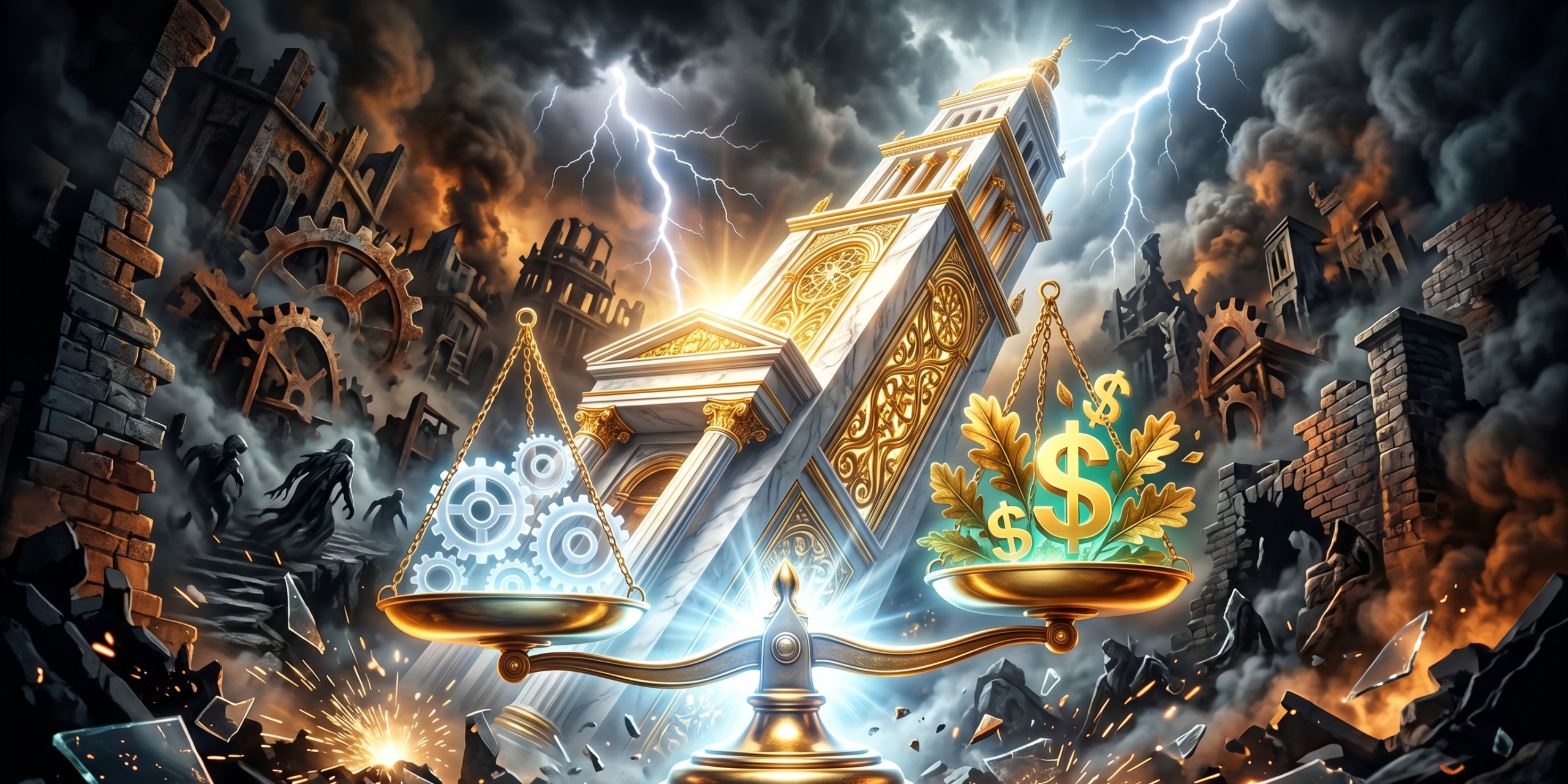
A legacy is vulnerable to “Mission Drift”—the slow erosion of values that often occurs after a founder leaves. Governance is the technical solution to this problem. It involves creating a board of directors and legal structures that are duty-bound to protect the core mission.
The Stewardship Model
In a stewardship model, the board’s primary role is not just fiduciary oversight but “Mission Oversight.” This includes:
- The “Veto” Power: Ensuring that major strategic pivots do not violate the foundational principles of the legacy.
- Succession Oversight: Selecting leaders based on their alignment with the legacy, not just their technical resume.
- Capital Protection: Ensuring that the company’s assets are managed to support long-term stability rather than just short-term liquidation.
Succession Intelligence: Engineering the Hand-Off
The most common point of failure for a business legacy is a poor succession. Visionary leadership requires “Succession Intelligence”—the ability to build a team that is better than the leader. This process often takes 5 to 10 years and involves several technical stages.
- Stage 1: Delegation of Authority. Moving from “Command and Control” to “Outcome-Based Leadership.”
- Stage 2: Mentorship and Exposure. Bringing potential successors into high-stakes strategic meetings to observe the “Decisional Logic” of the founder.
- Stage 3: Controlled Autonomy. Giving the successor full control over a major business unit to test their judgment and resilience.
- Stage 4: Phased Transition. Gradually reducing the founder’s involvement from CEO to Chairman to Advisor.
Impact Beyond the Balance Sheet
A true legacy is felt beyond the walls of the company. It influences the industry, the community, and the environment. Visionary leaders recognize that their organization is part of a larger ecosystem.
Industry Standards and Innovation
A company builds a legacy by setting a new bar for excellence. Whether it is a commitment to safety, a breakthrough in technology, or a new ethical standard in the supply chain, these contributions become part of the “Public Commons.” Even if the company eventually fades, the impact of those standards remains.
Enduring Social Value
Legacy-building often involves “Integrated Philanthropy”—aligning the company’s core business activities with a social good. This is distinct from “Corporate Social Responsibility” (CSR) programs that are often superficial. Integrated legacy value is found when the product itself makes the world better, creating a cycle where business success and social impact are mutually reinforcing.
The Psychological Barrier: The “Founder’s Ego”
The greatest threat to building a legacy is the founder’s own ego. Many leaders struggle to let go because they derive their identity from being the “Hero” who solves every problem. To build a legacy, the leader must be willing to become “Irrelevant.”
This requires a high degree of emotional maturity. The leader must find satisfaction in the success of their subordinates and the stability of the systems they have built. A legacy is only achieved when the organization can survive a “Bad Leader.” If the systems and culture are strong enough to withstand a period of suboptimal management without collapsing, the visionary has succeeded.
Measuring Legacy: The “Decade-After” Test
How do we measure a legacy? It cannot be done in real-time. The true test of a legacy is the state of the organization ten years after the visionary has left.
- Is the culture still recognizable? Do employees still talk about the core principles?
- Is the company still innovative? Has it evolved the vision, or is it merely “protecting the past”?
- Is the impact still growing? Has the company’s influence on the world continued to expand?
Conclusion: The Executive as an Architect
Legacy building is the ultimate act of leadership. It transforms a business from a tool for wealth creation into a vessel for enduring value. By moving from the tactical to the systemic—focusing on culture, governance, and succession—the visionary ensures that their work continues to provide stability and opportunity for others long into the future.
The goal is to build an entity that is “Built to Last,” not just “Built to Sell.” In 2026, where the average lifespan of a corporation is shrinking, the visionary leader stands out by their commitment to the long-term. They understand that their greatest achievement is not what they did, but what they left in motion. Success is the baseline; legacy is the objective.











Leave a Reply